
Seasonal garden-to-table recipes
Cook what is ready. Preserve what is abundant.
Simple recipes for garden fruit, herbs and vegetables—built around what we are harvesting in our Zone 8b garden and what is already waiting in the pantry.
Start with what needs using
Choose the harvest before the recipe
Ripeness, moisture and quantity often decide the best way to use an ingredient. Very soft fruit belongs in a different recipe than fruit firm enough for slicing.
Raspberries
Small-batch drinks, seedless spreads, sauces, breakfast toppings and desserts for fresh, frozen or freeze-dried berries.
Figs and fruit
Fresh toasts, compotes and savory pairings for ripe orchard fruit—including green figs that never turn purple or brown.
Garlic and herbs
Compound butters, sauces, dressings and freezer-friendly flavor bases for elephant garlic and fast-growing herbs.
Garden vegetables
Flexible seasonal meals for raised-bed vegetables, tender greens and whatever reaches the kitchen before the slugs do.
From our August harvest
Three simple recipes to make now
These are small-batch recipes for immediate eating or refrigerated use. They are not shelf-stable home-canning formulas.
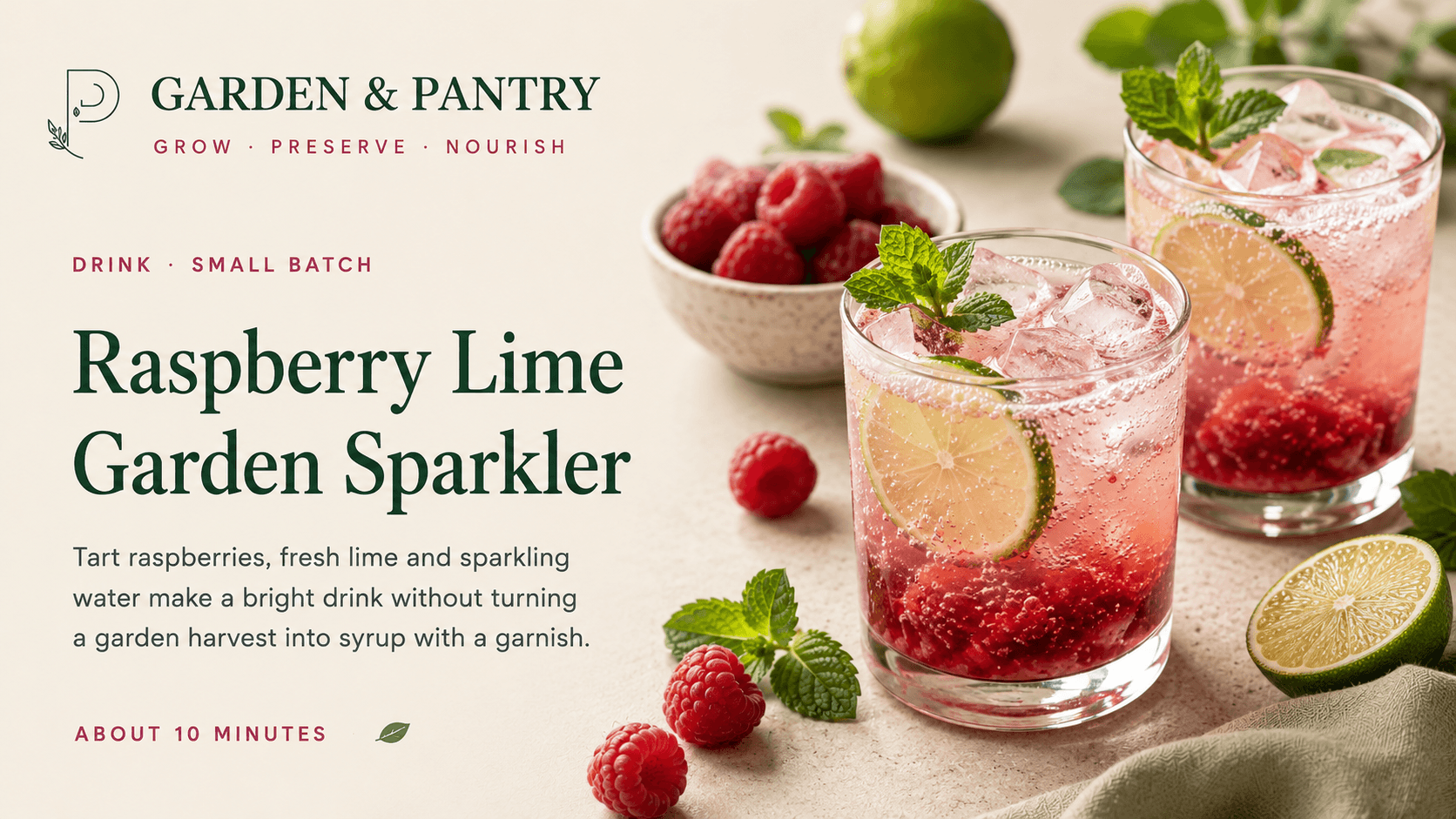
Drink · Small batch
About 10 minutesRaspberry Lime Garden Sparkler
Tart raspberries, fresh lime and sparkling water make a bright summer drink without turning a garden harvest into syrup with a garnish.
You will need
- 1 cup fresh or thawed raspberries
- 2 tablespoons lime juice
- 1–2 tablespoons honey or sugar, to taste
- 2 cups chilled sparkling water
- Ice and mint, optional
Quick method
- Mash the raspberries with lime juice and sweetener.
- Press through a fine sieve if you prefer a seedless drink.
- Divide between two glasses filled with ice.
- Top slowly with sparkling water and stir once.
Garden note: Very ripe berries work well here. Taste before sweetening because raspberry varieties and harvest dates change the balance.
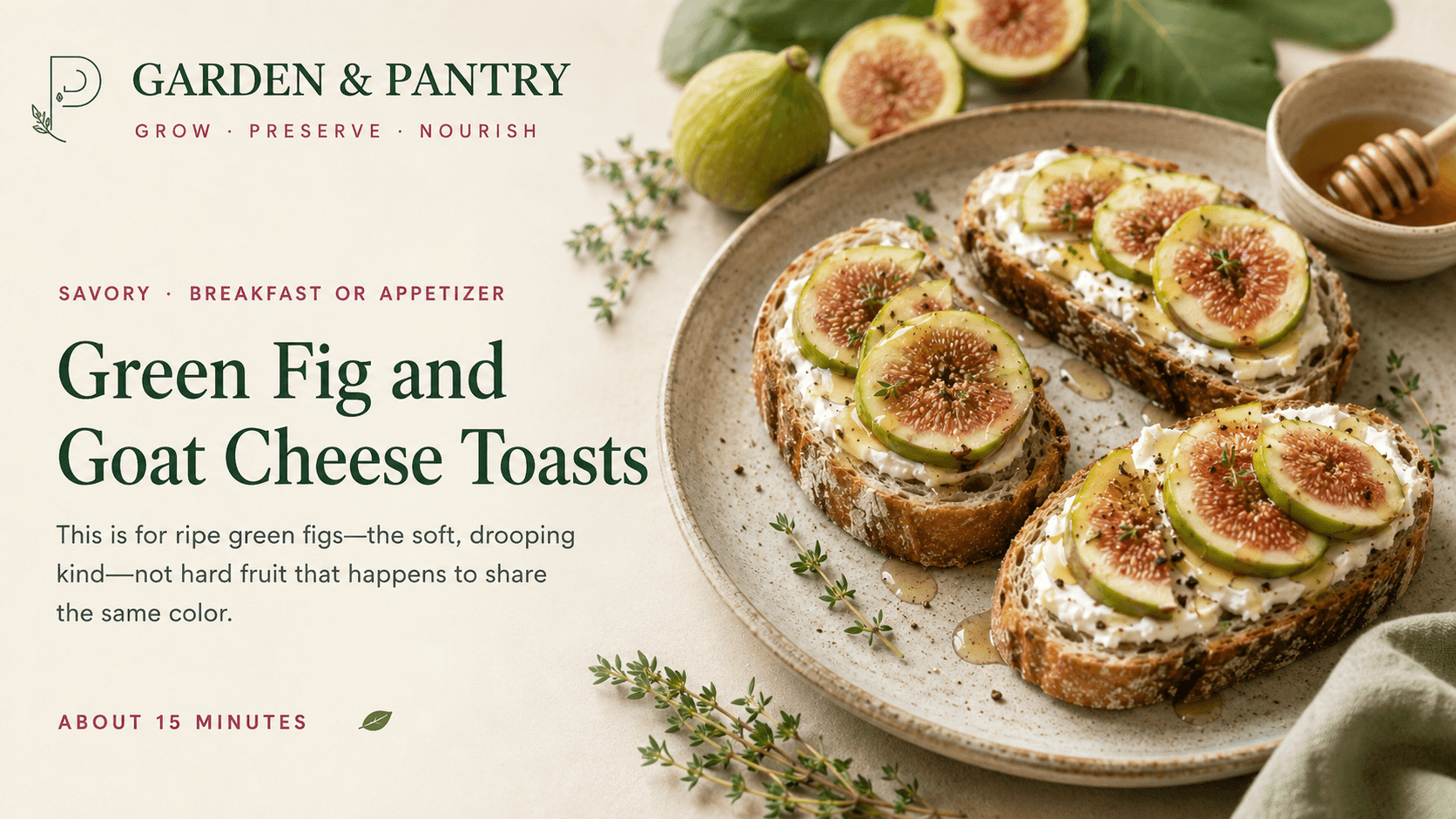
Savory · Breakfast or appetizer
About 15 minutesGreen Fig and Goat Cheese Toasts
This easy fig toast is for truly ripe green figs—the soft, drooping kind—not hard fruit that happens to share the same color.
You will need
- 4 slices sturdy bread
- 3–4 ripe green figs
- 4 ounces soft goat cheese
- 1 teaspoon honey
- Black pepper
- Fresh thyme, optional
Quick method
- Toast the bread until the edges are crisp.
- Spread each slice with soft goat cheese.
- Slice the ripe figs and arrange them on top.
- Finish with honey, black pepper and thyme.
Easy variation: Use ricotta for a milder toast, or add a thin slice of prosciutto for a more savory version.
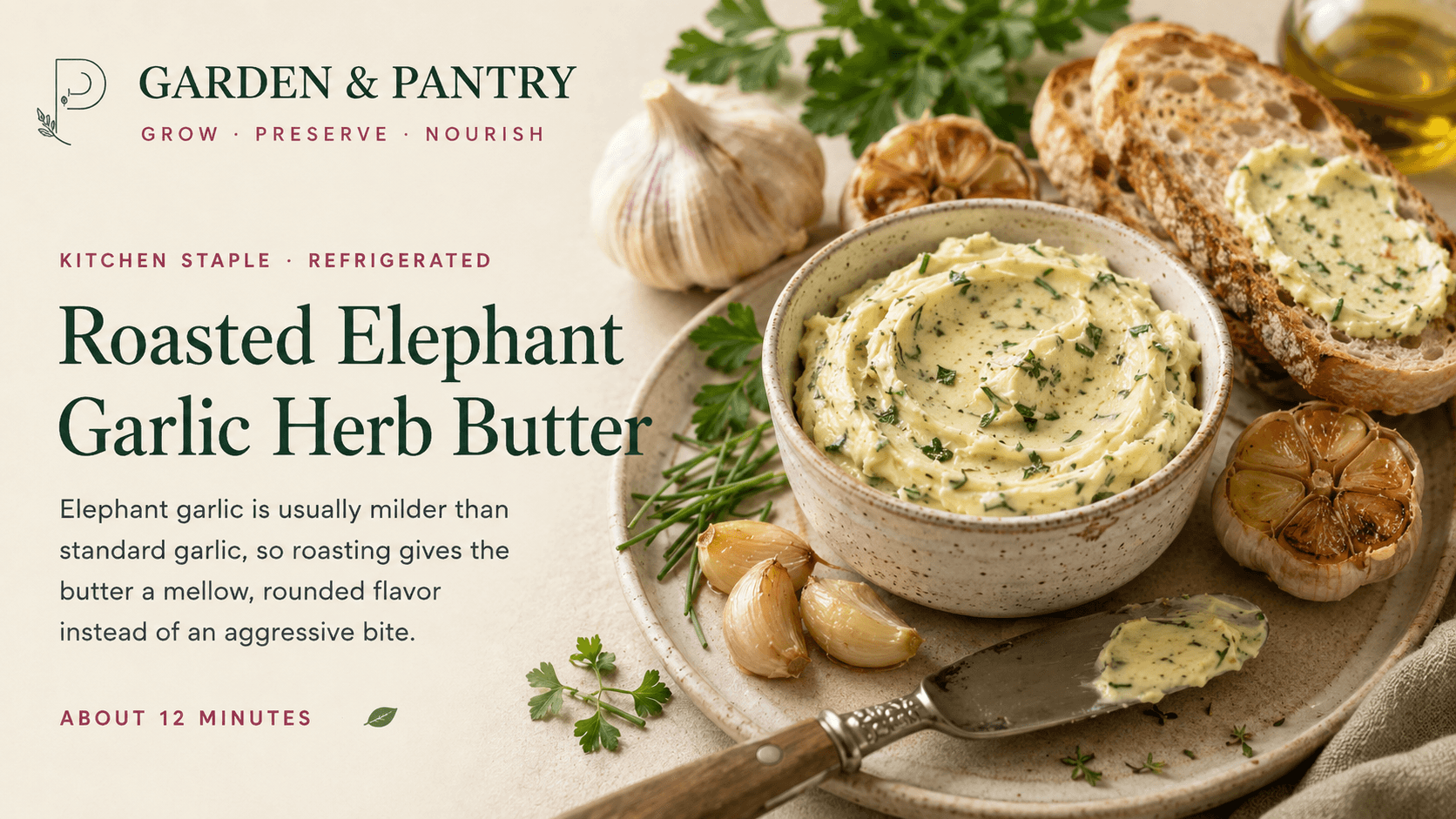
Kitchen staple · Refrigerated
About 12 minutes plus roastingRoasted Elephant Garlic Herb Butter
Elephant garlic is usually milder than standard garlic. Roasting gives this compound butter a mellow, rounded flavor instead of an aggressive bite.
You will need
- 3–4 elephant garlic cloves
- 1 teaspoon olive oil
- ½ cup softened unsalted butter
- 1 tablespoon chopped parsley or chives
- Salt and pepper, to taste
Quick method
- Roast peeled cloves with olive oil until soft and golden.
- Cool completely, then mash into a paste.
- Mix with butter, herbs, salt and pepper.
- Refrigerate covered and use on bread, vegetables or grilled food.
Food-safety note: Keep this fresh compound butter refrigerated. It is not a shelf-stable garlic storage method.
Recipe ideas by need
What does the harvest need to become?
Start with the job at hand: use very ripe fruit today, make breakfast quickly, add something savory to dinner or turn preserved produce back into food people actually want to eat.
A working garden kitchen
How a recipe earns a place here
Garden ingredients change with variety, weather and ripeness. Our recipes are written around the harvest we actually have, not a produce-bin fantasy arranged with tweezers.
Tested with the harvest
We explain the ripeness, texture and clues that affect a result rather than pretending every raspberry, fig or garlic bulb behaves identically.
Useful substitutions
When a simple swap works, we explain it. When a change affects food safety, structure or preservation, we say so clearly.
Connected to preservation
We include ways to use frozen, dried and freeze-dried ingredients so preserved food moves out of storage and back onto the table.