
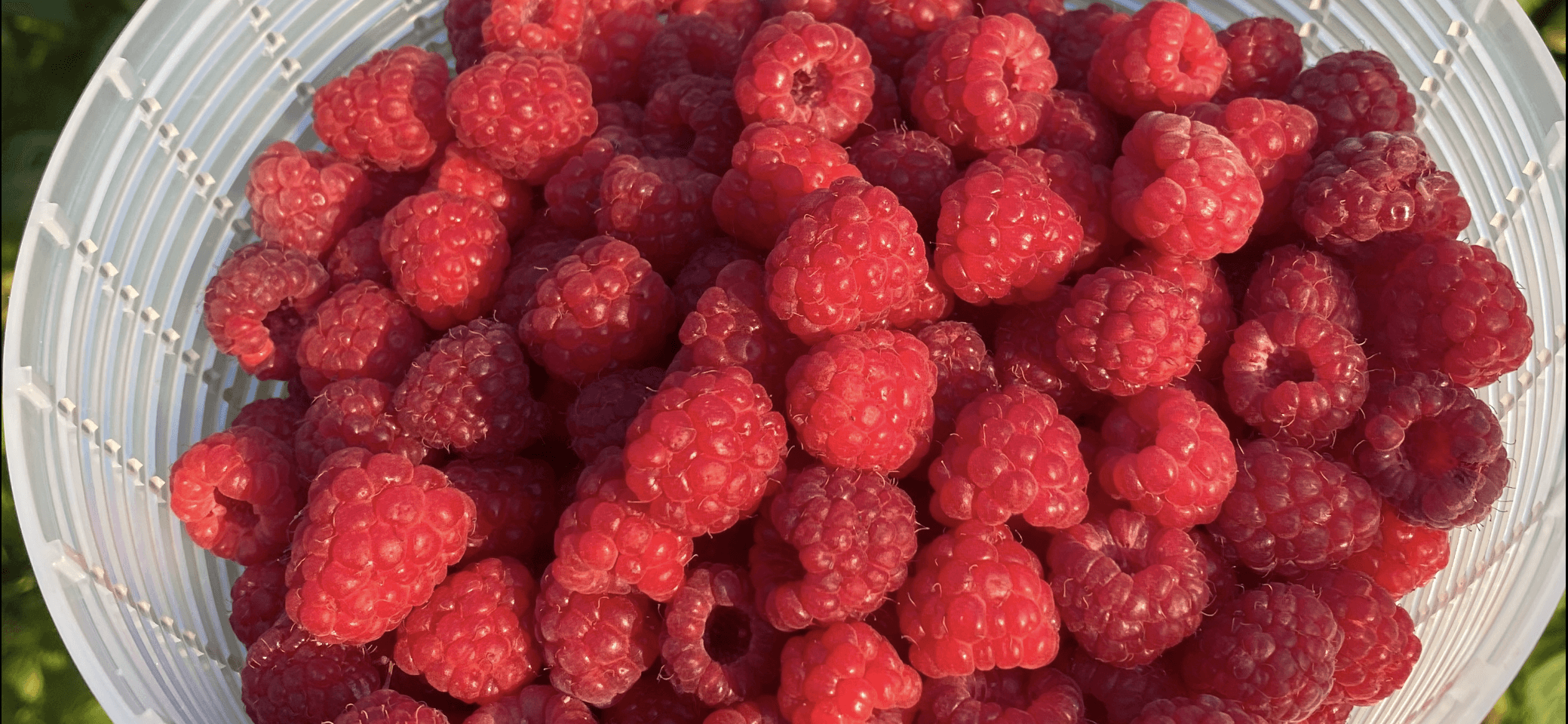
Fresh raspberries can go from perfect to soft in a hurry. Freeze-drying turns a fragile harvest into intensely flavored, crisp berries—but only when the fruit is prepared gently, dried completely and packaged before it can absorb moisture again.
The short answer
To freeze-dry raspberries, sort and gently rinse firm ripe berries, drain and dry their surfaces, then arrange them in one uncrowded layer on freeze-dryer trays. Run the machine according to its manufacturer’s instructions. When the cycle ends, break open berries from several trays: they should be crisp and dry throughout, with no cool, soft or gummy center. Add more dry time whenever you are unsure. Package immediately in a moisture-resistant airtight container; use an oxygen absorber when appropriate for your chosen long-term storage method.
Start with firm, sound raspberries
Freeze-drying preserves the quality you put into the machine; it does not rescue spoiled fruit. Choose ripe berries with good color and flavor that still hold their shape. Set aside crushed but sound berries for jam, sauce or purée. Discard berries with mold, fermentation odors or decay.
Process the harvest as soon as practical. If you cannot load the freeze dryer immediately, refrigerate the berries in a shallow container so they are not crushed under their own weight.
Should raspberries be washed before freeze-drying?
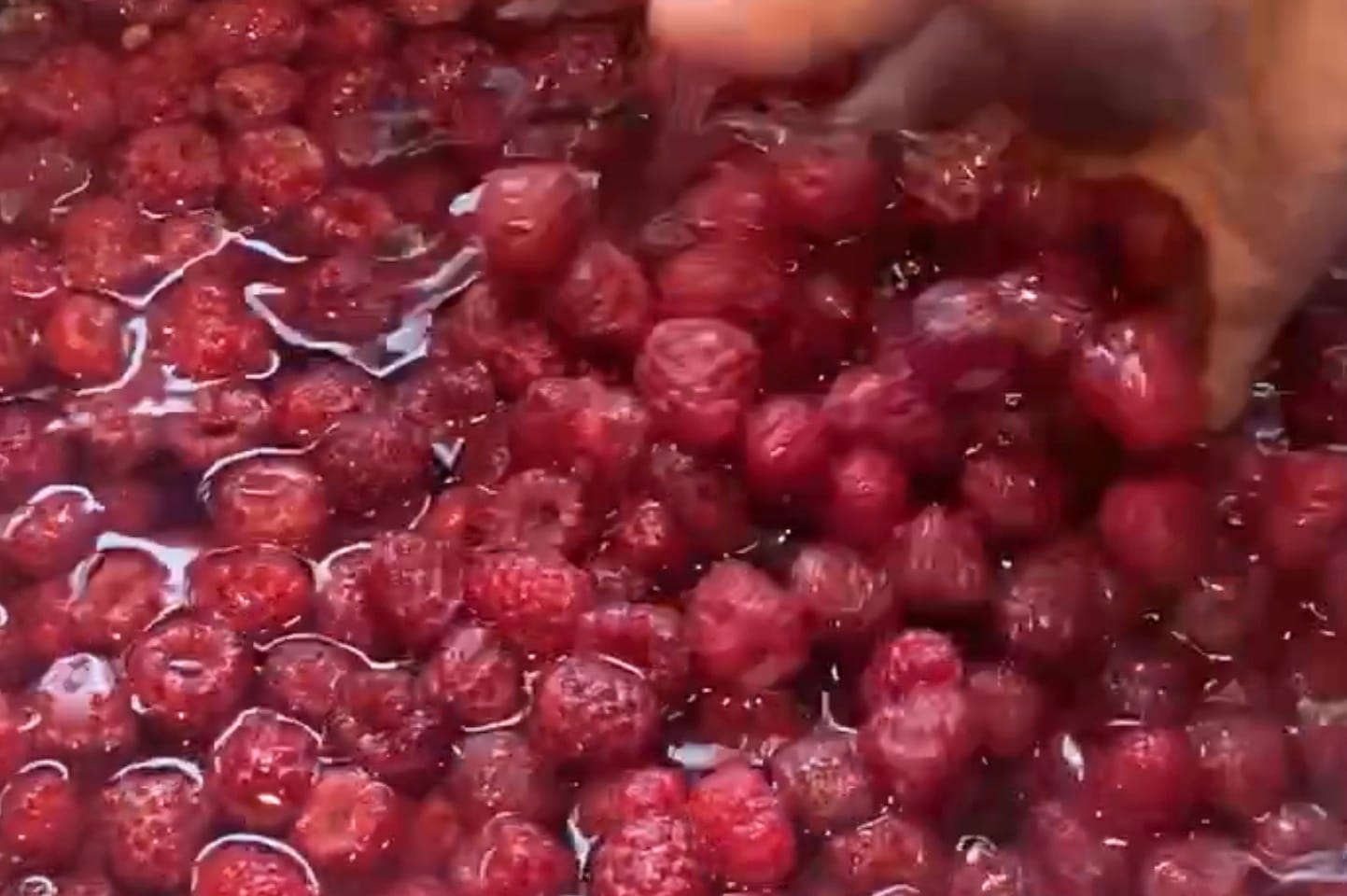
Yes. Sort first, then rinse gently under cool running water. Avoid soaking them; raspberries are hollow, delicate and quick to take on water. Drain in a colander and spread them on clean towels until the surface moisture is gone. Extra water can lengthen the cycle and encourage the berries to freeze together.
What you need
- A home freeze dryer in clean working order
- Freeze-dryer trays and liners approved for your machine
- A colander and clean absorbent towels
- A clean scoop or dry hands for packaging
- Airtight jars for fruit you will use soon
- High-barrier bags suitable for longer storage
- Oxygen absorbers when appropriate for the package size and storage method
- Labels and a permanent marker
How to freeze-dry raspberries, step by step
- Sort the harvest. Remove leaves, stems, insects and damaged berries. Do not use moldy or spoiled fruit.
- Rinse gently. Wash the berries under cool running water, then drain without pressing or rubbing them.
- Dry the surfaces. Spread the berries on clean towels. Blot only if needed, using a light touch.
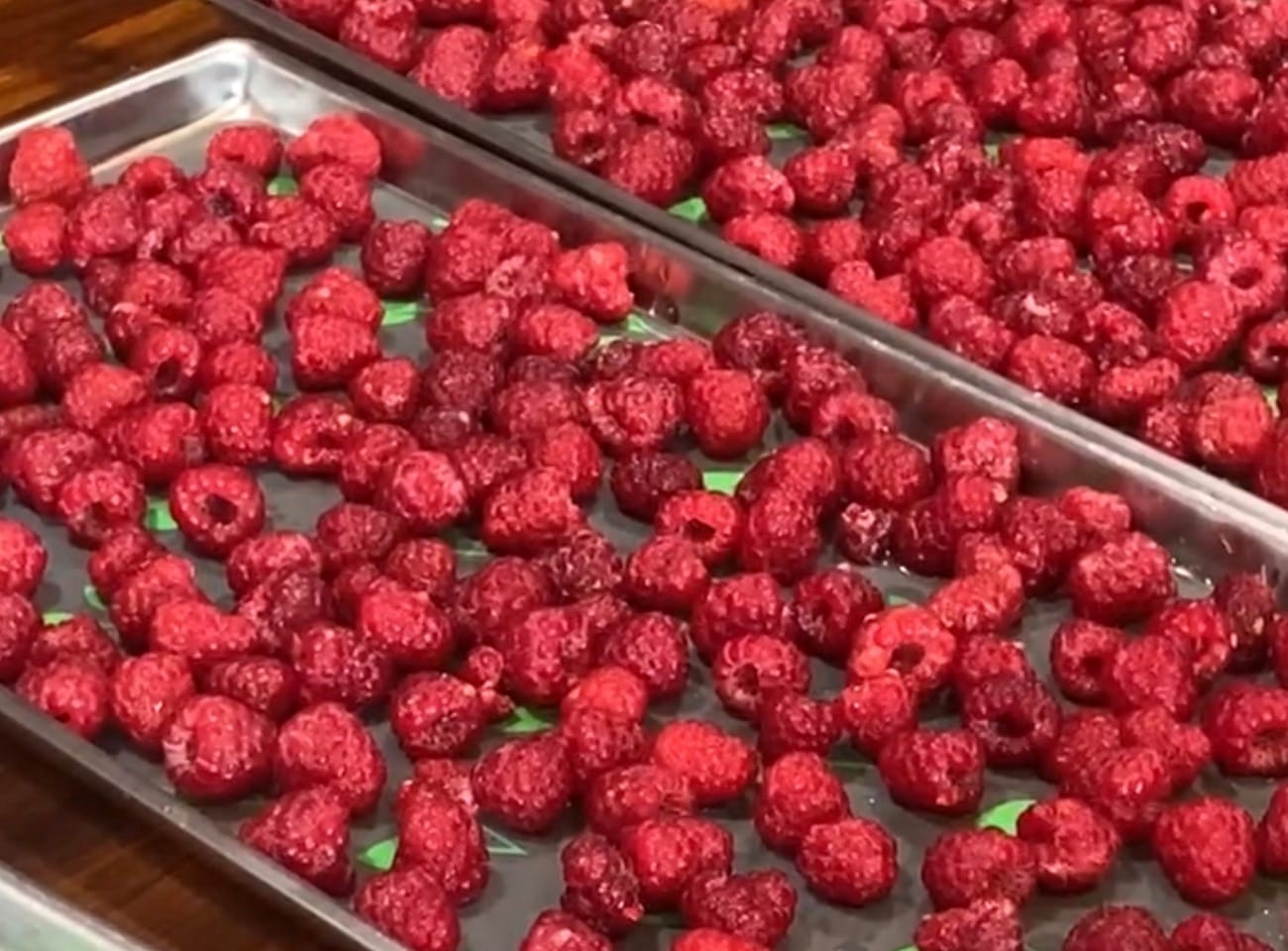
- Load one layer deep. Place berries upright or on their sides with a little room between them. Keep the load below the tray rim and within your machine’s limits. Whole raspberries usually do not need to be sliced.
- Pre-freeze if it suits your machine and routine. A level tray of pre-frozen berries is easier to move without crushing and may make the freezing stage more efficient. Use only a method allowed by your manufacturer.
- Run the complete cycle. Select the correct setting for fruit or follow the machine prompt. Cycle time changes with berry size, load depth, starting temperature, room conditions and equipment, so use the machine’s endpoint—not a promised number of hours.
- Test before packaging. Check berries from the center and edges of more than one tray. If any sample is cool, soft, leathery or gummy inside, return all trays to the machine and add dry time.
- Package at once. Freeze-dried raspberries pull moisture from humid air quickly. Move them into prepared dry containers as soon as the dryness test is passed.
How to tell when freeze-dried raspberries are done
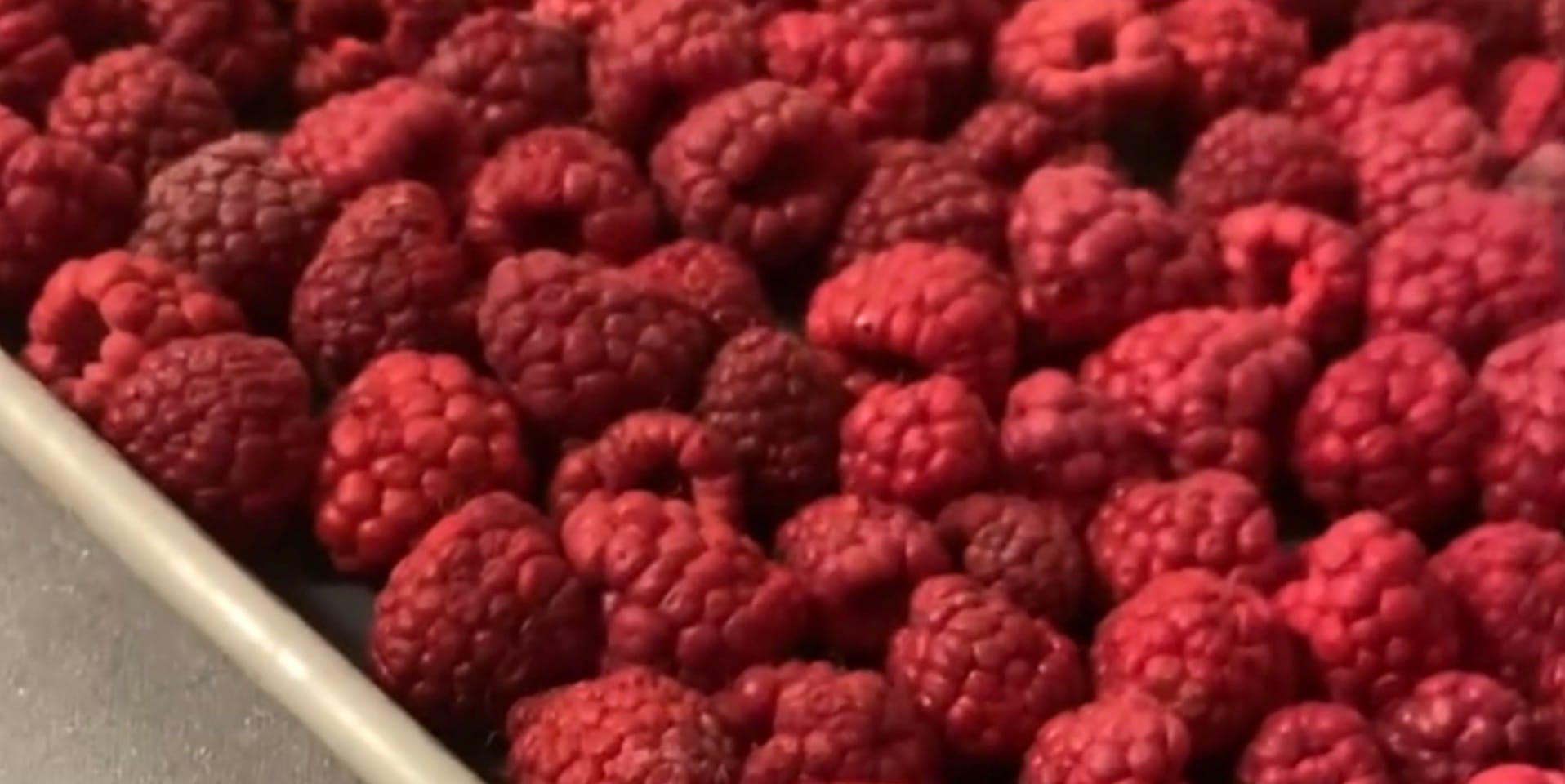
A finished raspberry should feel very light and dry, with a crisp, airy texture. The outside alone cannot confirm the center is dry. Break or crush several of the largest berries, including samples from different trays and different parts of each tray.
- Done: Crisp, brittle and dry through the center with no cool spot or tackiness.
- Not done: Cool, soft, flexible, chewy, sticky or gummy anywhere inside.
If there is doubt, add more drying time and test again. One damp berry can introduce moisture into the entire package.
How to package freeze-dried raspberries
Choose the package for the way you will use the fruit. For frequent snacking, a clean, completely dry airtight jar is convenient. For longer storage, use a food-grade, high-barrier package recommended for freeze-dried food. Add an appropriately sized oxygen absorber when that is part of your storage system, then seal promptly.
Label every container with the food, harvest or batch date and packaging date. Store it in a cool, dry, dark location away from temperature swings.
Shelf life depends on complete dryness, packaging quality, seal integrity and storage conditions. Inspect each package before eating. If the berries have softened, the package has lost its seal, or you see moisture, mold or an unusual odor, do not treat them as shelf-stable.
Common raspberry freeze-drying problems
| Problem | Likely cause | What to do |
|---|---|---|
| Berries are chewy in the center | The load needs more dry time | Return every tray to the machine, add dry time and retest large berries from multiple locations. |
| Berries freeze into a clump | They were wet, touching or piled too deeply | Dry surface water and load a single uncrowded layer next time. |
| Finished berries become soft | They absorbed humidity during cooling or packaging, or the seal failed | Work quickly, use dry containers and verify the seal. Do not place questionable fruit into long-term storage. |
| Berries collapse or crumble | They were overripe, crushed during washing or handled roughly | Use firm fruit, shallow containers and a gentle rinse. Save the crumbs for raspberry powder. |
| The cycle runs longer than expected | Heavy load, wet fruit, warm starting temperature or room conditions | Stay within tray limits, remove surface water and follow the machine’s placement and maintenance guidance. |
Ways to use freeze-dried raspberries
- Eat them dry as a crisp snack.
- Crush them over oatmeal, yogurt or cereal just before serving.
- Fold pieces into granola or trail mix.
- Grind them into powder for frosting, buttercream, smoothies or naturally colored sugar.
- Rehydrate small amounts for sauces, fillings and baked recipes where a softer texture works.
For powder, grind only what you need and keep the rest whole. More exposed surface area means powdered fruit absorbs moisture even faster.
Frequently asked questions
Can you freeze-dry raspberries whole?
Yes. Their small size and hollow structure make whole raspberries practical to freeze-dry. Arrange them in one layer and verify dryness by breaking open the largest berries.
Do raspberries need pretreatment?
Plain raspberries generally do not need syrup, sugar or blanching before freeze-drying. Sort, rinse, drain and dry their surfaces.
Can frozen raspberries go directly into a freeze dryer?
Often yes, provided they were handled safely, remain frozen and your machine permits pre-frozen loads. Separate clumps where possible and follow the manufacturer’s loading directions.
How long does it take to freeze-dry raspberries?
There is no reliable universal time. Machine model, load size, berry moisture, pre-freezing and room conditions all affect the cycle. Let the machine complete its process, then use the physical dryness test before packaging.
Why are my freeze-dried raspberries sticky?
They may still contain moisture or may have absorbed humidity after the cycle. Add dry time if they are fresh from the machine. If stored fruit becomes sticky, investigate the seal and do not assume it remains shelf-stable.
Keep the harvest moving
Use the Garden & Pantry Planting List to plan what goes into the beds next, then preserve each harvest at its peak.
Open the Planting List