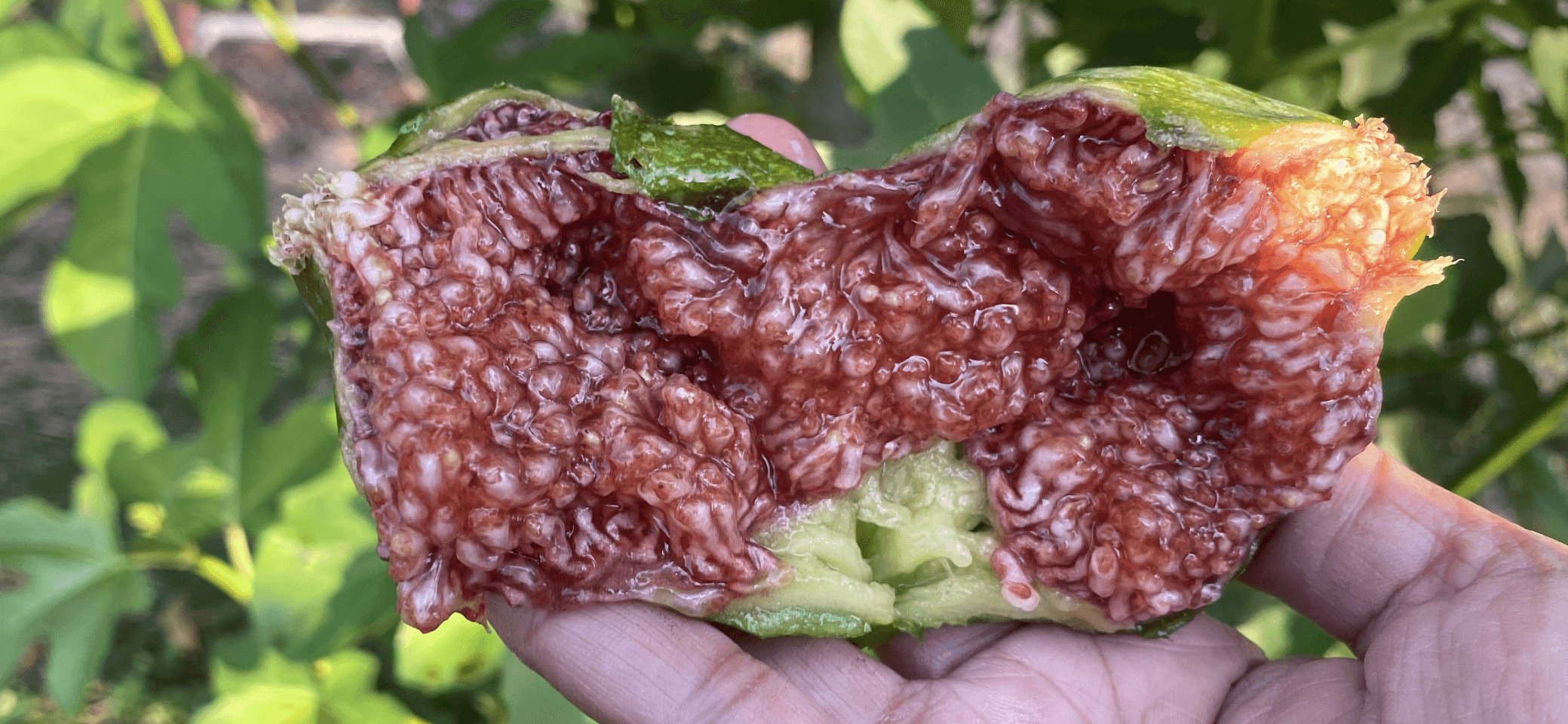
You have probably heard the claim: every fig contains a dead wasp. The real story is more interesting—and far less alarming. Some fig varieties depend on a tiny fig wasp for pollination, but most backyard figs produce fruit without one.
The short answer
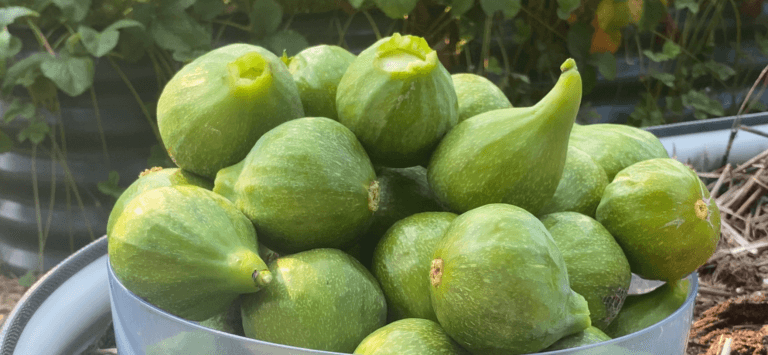
No, not every fig contains a dead wasp. Most figs grown in home gardens are common or persistent types that form fruit without pollination. Brown Turkey is one of these varieties.
Other types, including Smyrna figs and the main crop of some San Pedro figs, require pollen carried by a specialized fig wasp. Even in those pollinated figs, you are not biting into an intact insect. Any remains are broken down as the fig develops and ripens.
Why a fig is not an ordinary fruit
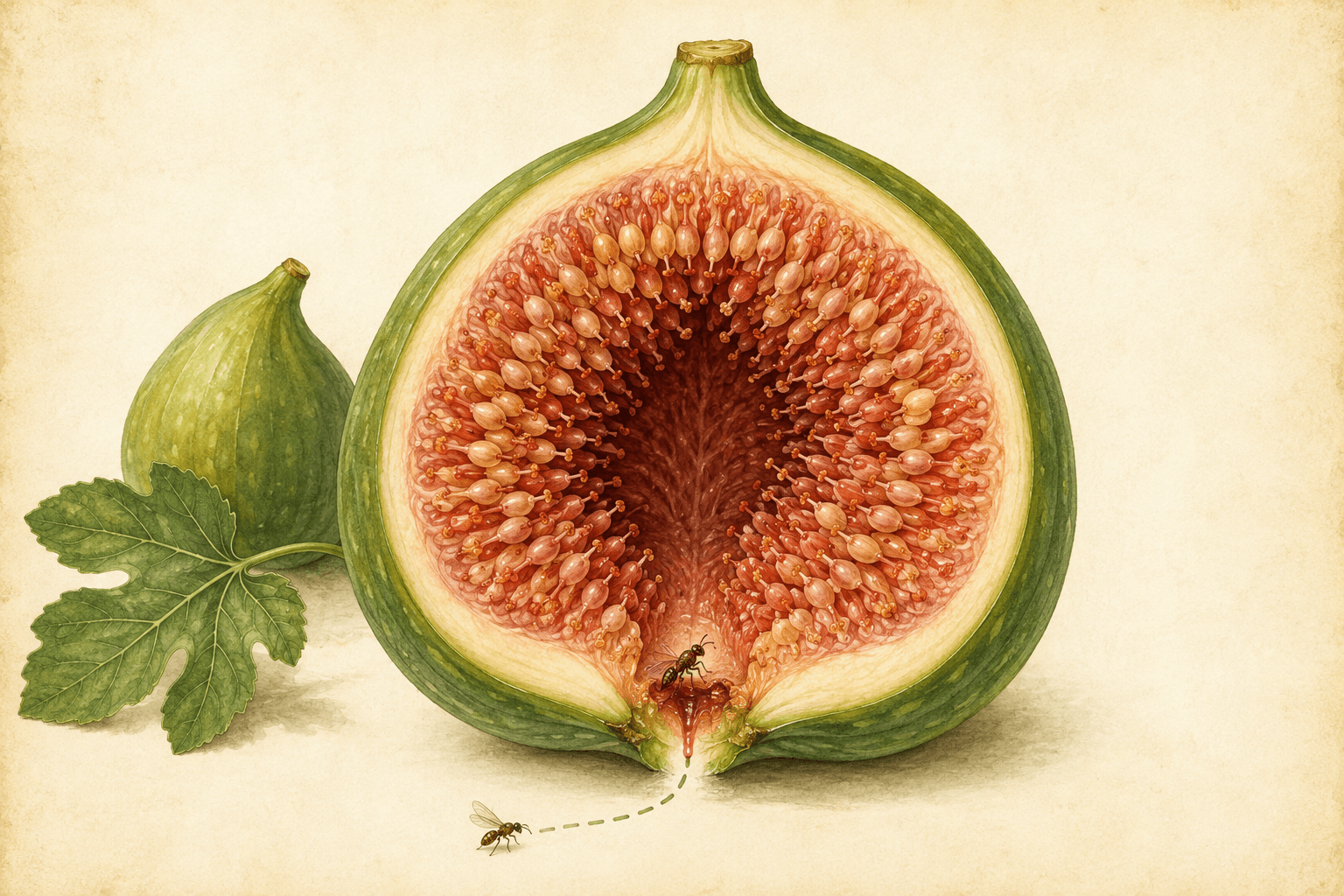
A fig looks like a single fruit, but botanically it is a hollow structure called a syconium. Hundreds of tiny flowers grow on its inside surface instead of blooming where we can see them.
When those internal flowers mature, they form the small structures commonly called fig “seeds.” This unusual inside-out arrangement explains why certain fig varieties developed such a specialized relationship with fig wasps.
The true part of the fig-wasp story
The pollinator of the edible fig species Ficus carica is a tiny wasp commonly called the fig wasp, Blastophaga psenes. It is dramatically smaller than the yellow jackets and paper wasps people usually picture.
A pollen-carrying female enters a receptive fig through the ostiole—the small opening at its base. In a caprifig, the functionally male fig used by the wasp for reproduction, she can lay eggs in suitable flowers. A new generation develops inside. The wingless males mate with the females and create an exit; the females leave carrying pollen and continue the cycle.
When a female enters a receptive edible Smyrna fig, its flower structure prevents her from reproducing successfully. She still delivers the pollen the crop needs, but she commonly dies inside.
What happens to the wasp?
- The wasp is only a few millimeters long.
- Fig tissue contains protein-breaking enzymes, including ficin.
- Its remains break down while the fig develops.
- A ripe pollinated fig does not contain a recognizable whole wasp.
The viral version skips the important distinction between figs that require this pollination system and figs that produce normally without it.
Which fig varieties need wasp pollination?
| Fig type | How it produces | Examples | Wasp pollination required? |
|---|---|---|---|
| Common or persistent | Produces figs without fertilization; this is called parthenocarpy. | Brown Turkey, Celeste, Black Mission, Chicago Hardy and many backyard varieties | No |
| Smyrna | Its crop must be pollinated or the immature figs normally drop. | Calimyrna | Yes |
| San Pedro | The early breba crop forms without pollination; the later main crop usually requires it. | Desert King | No for the breba crop; yes for the main crop |
| Caprifig | Supports the fig wasp’s reproductive cycle and supplies pollen. | Pollinator figs used in caprification | Part of the wasp life cycle |
Home gardeners usually grow common-type figs because they set fruit reliably without needing a caprifig, a pollinating wasp population or a commercial caprification program.
What this means for our Brown Turkey and Desert King figs
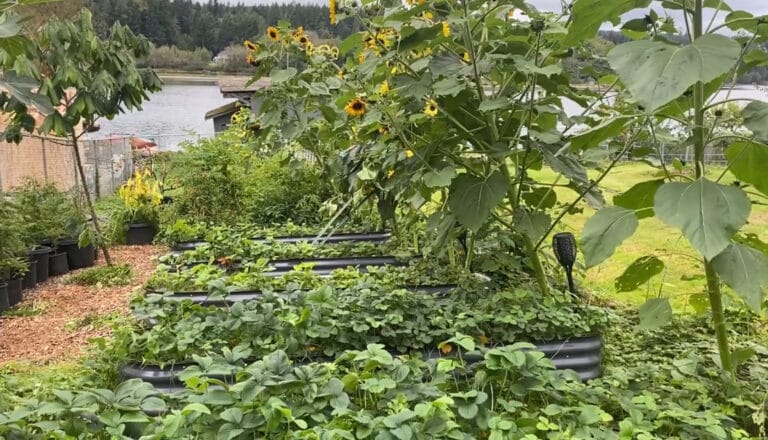
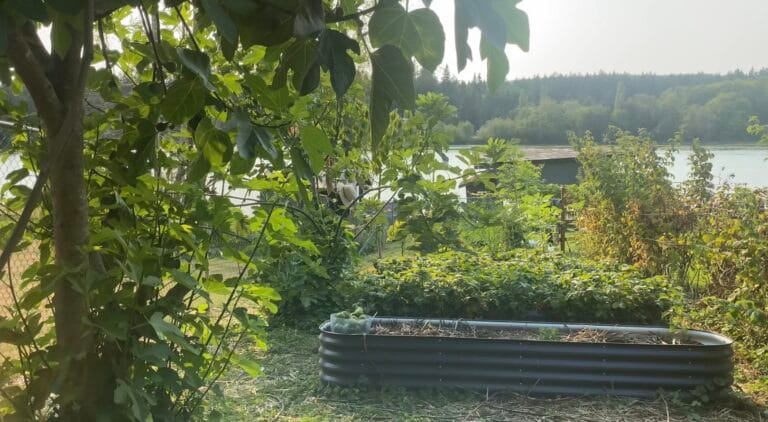
We grow Brown Turkey and Desert King figs in our Zone 8b waterfront garden on Washington’s Kitsap Peninsula.
Brown Turkey
Brown Turkey is a common-type fig. It does not need fig-wasp pollination to produce its crop. The figs can swell, soften and ripen through parthenocarpy.
Desert King
Desert King is a San Pedro-type fig. Its early breba crop grows on wood produced during the previous season and forms without pollination. This is the crop for which Desert King is especially valued in cool maritime climates.
Its later main crop ordinarily requires pollination. In regions without the necessary fig-wasp and caprifig system, that later crop may fail to develop or drop before ripening.
Washington State University has documented breba production from Desert King in western Washington, while Oregon State University recommends Desert King for western Oregon and other suitably protected areas.
Can you find a dead wasp inside a ripe fig?
Not in the dramatic form suggested by social-media posts. A pollinated fig does not normally reveal a miniature wasp sitting among the pulp waiting to ruin breakfast.
The crunchy texture in a fig comes primarily from its small fruits and seeds—not from wasp body parts. Pollination can produce more fully developed seeds, so some pollinated figs have a stronger nutty crunch, but texture alone is not a reliable home test for whether a wasp entered a particular fig.
You may occasionally find ants, beetles, vinegar flies or other insects feeding inside damaged or overripe figs. Those are ordinary pests entering through a split or the ostiole; they are different from the specialized fig wasp responsible for pollination.
How to determine whether your fig variety needs pollination
-
Start with the variety name
A confirmed cultivar name is more useful than skin color. Green, brown and purple figs can belong to different pollination groups.
-
Check a university or extension reference
Look for the terms common, persistent, Smyrna, San Pedro or caprifig. Nursery descriptions sometimes omit the pollination category.
-
Observe when the crop forms
An early crop growing on last year’s wood is the breba crop. Desert King is especially known for this crop in the Pacific Northwest.
-
Watch what happens to the later crop
If later figs form on new growth but remain small or drop, pollination requirements, insufficient summer heat or other growing conditions may be involved.
-
Do not identify the type from one cut fig
Interior color, seed crunch and fruit size vary with cultivar, weather, ripeness and pollination. They are clues—not a botanical identification certificate.
Are figs vegan?
Most backyard figs are common types produced without fig-wasp pollination, so the popular dead-wasp concern does not apply to them.
Wasp-pollinated figs are part of a natural plant–insect relationship rather than conventional animal farming or an added food ingredient. Whether someone includes those figs in a vegan diet is ultimately a personal ethical decision. The important factual point is that not all figs—and certainly not every backyard fig—use this pollination system.
Frequently asked questions
Does every fig have a wasp inside?
No. Common-type figs produce without pollination. These include many varieties sold to home gardeners, such as Brown Turkey, Celeste and Chicago Hardy.
Do Brown Turkey figs need a fig wasp?
No. Brown Turkey is a common or persistent fig that forms its crop without fig-wasp pollination.
Do Desert King figs contain wasps?
The early Desert King breba crop does not require pollination. Its later main crop normally requires fig-wasp pollination. In the Pacific Northwest, Desert King is primarily valued for its unpollinated breba crop.
Do Calimyrna figs require wasps?
Calimyrna is a Smyrna-type fig. Commercial production traditionally relies on caprification, in which pollen-bearing fig wasps move from caprifigs to receptive edible figs.
Is the crunchy part of a fig a dead wasp?
No. The crunch comes from the fig’s numerous small fruits and seeds. Pollinated figs may develop firmer seeds, but the crunch is not a collection of wasp parts.
Can ordinary wasps crawl into ripe figs?
Yellow jackets and other insects may feed on split, damaged or overripe figs. That does not mean they pollinated the fruit. Harvest ripe figs promptly and discard fruit showing mold, fermentation or extensive insect damage.
How can I tell when a green fig is ripe?
Look for a soft neck, downward droop, swollen size, gentle skin softness and easy release from the branch. Color alone is unreliable for naturally green varieties.
Not sure whether your green figs are ready?
Use softness, droop, size and stem clues instead of waiting for a green fig to change into a completely different color.
Read the Green Fig Ripeness Guide →- UC Master Gardeners: Fig types and pollination
- University of California Cooperative Extension: Fig botany, biology and production
- Oregon State University Extension: Growing figs in Oregon
- Oregon State University Extension: Growing tree fruits and nuts at home
- Washington State University: Maritime-climate fig observations
- Penn State Extension: Figs in the home garden